What is Scoliosis?
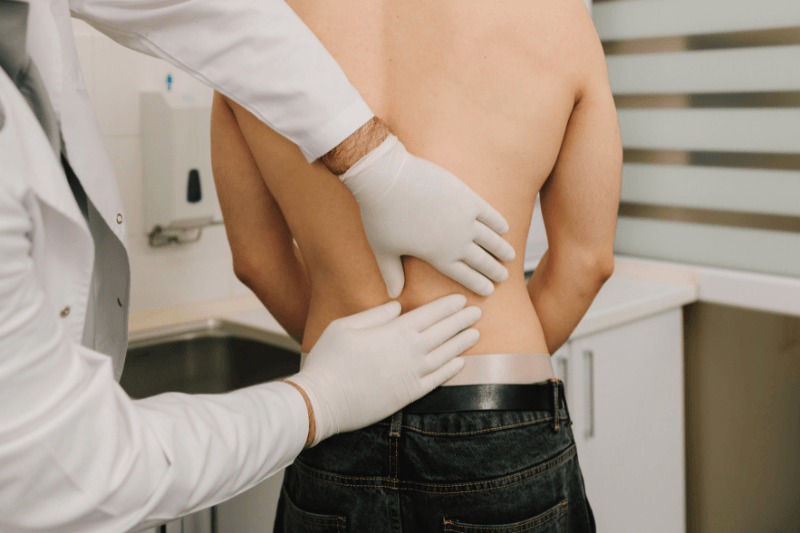
Scoliosis is a condition where the spine curves sideways in a “C” shape or “S” shape, rather than running straight down the middle of the back. While a normal spine has natural front-to-back curves, scoliosis involves a side-to-side curvature that also often includes rotation, making the ribs or shoulder blades appear uneven. Most cases are idiopathic, meaning no single cause is identified, and these typically appear during the adolescent growth spurt. Adult scoliosis can represent a continuation of a childhood curve or develop later in life due to degenerative changes in the discs and joints.
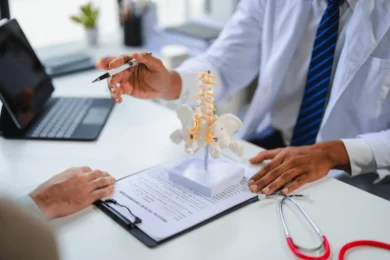
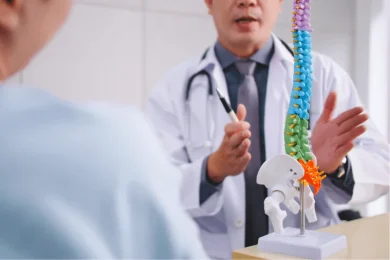
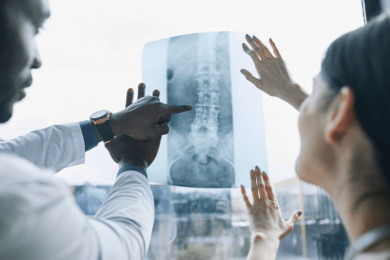
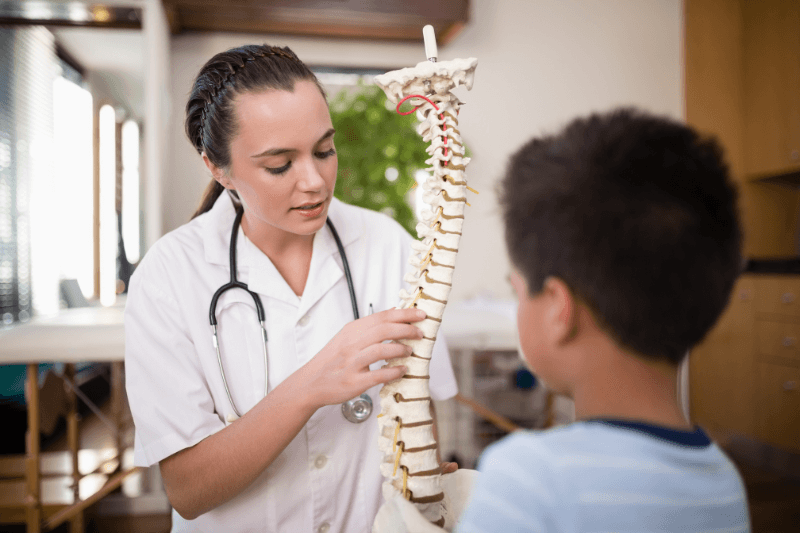
At Spine Solutions in Hollywood, Boca Raton, and Coral Gables, board-certified orthopedic spine surgeon Dr. Behnam Myers takes time to measure your specific curvature angle, assess your skeletal maturity, and evaluate any symptoms you are experiencing. Our team of spine experts will ensure you receive the best possible care, treatment and surgery (if necessary) for your scoliosis.
What Causes Scoliosis and Spinal Curvature?
The causes of scoliosis fall into several distinct categories. Idiopathic scoliosis, which accounts for approximately eighty percent of all cases, has no known cause but is believed to involve genetic factors. This type most often appears in children between the ages of ten and eighteen. Congenital scoliosis occurs when the spinal bones do not form properly before birth, leading to a curve that may progress as the child grows. Neuromuscular scoliosis stems from conditions such as cerebral palsy, muscular dystrophy, or spinal cord injuries that affect the muscles supporting the spine.
Adult-onset scoliosis typically falls into two groups. The first is untreated adolescent scoliosis that continues to progress slowly over decades. The second, known as degenerative or de novo scoliosis, develops in adulthood due to asymmetric wear and tear on spinal discs and facet joints. Osteoporosis, previous spinal surgery, and significant leg length discrepancies can also contribute to curve formation.
At Spine Solutions, we perform a detailed history and physical examination to identify which type of scoliosis you have, because the expected progression and best treatment approach vary dramatically between these categories.
What Are the Most Common Symptoms of Scoliosis?
Scoliosis symptoms differ depending on the size and location of the curve, as well as the age of the patient. Many people with mild curves have no noticeable symptoms at all and discover the condition during a routine school screening or physical exam. When symptoms do appear, they often relate to visible changes in posture and alignment rather than pain, although discomfort becomes more common in adulthood. Common signs and symptoms include:
- One shoulder appearing higher than the other or one shoulder blade protruding more prominently
- An uneven waistline with one hip appearing higher or more prominent than the opposite side
- One leg seeming shorter than the other when lying flat
- The head not centering directly over the pelvis when standing
- Ribs that stick out more on one side, especially when bending forward
- Back pain that worsens after prolonged sitting or standing, often located at the curve apex
- Fatigue in the spine or legs after extended activity due to uneven muscle use
You may be a candidate for evaluation at Spine Solutions if you have noticed changes in your posture, if a family member or friend has commented on your back looking uneven, or if you are experiencing persistent back pain that does not respond to typical self-care measures. Dr. Myers assesses not just your curve measurement but also how your scoliosis affects your daily function, balance, and quality of life.
Get Life-Changing Scoliosis Surgery in Miami & South Florida
When surgical treatment becomes necessary, typically for curves exceeding 45 to 50 degrees in adolescents or for adults with progressive curves and debilitating pain that has failed conservative care, Dr. Myers offers advanced spinal fusion techniques. Using modern instrumentation such as pedicle screws and rods, he corrects the curve as safely as possible and stabilizes the affected vertebrae to prevent further progression.
Patients from across South Florida, including Miami, Hollywood, Boca Raton, and Coral Gables, choose Spine Solutions because of our reputation as the best spine surgery clinic in the area. Find out why: request your appointment with our expert team of spine specialists today.
Frequently Asked Questions About Scoliosis & Scoliosis Surgery
Can scoliosis get worse in adulthood?
Does scoliosis cause pain in young people?
What is the recovery time for scoliosis surgery?
Hospital stays typically range from three to six days following spinal fusion for scoliosis. Most patients return to school or desk work within four to six weeks. Restrictions on bending, lifting, and twisting usually last for three to six months, after which most patients resume all normal activities. Dr. Myers provides a detailed recovery roadmap tailored to your specific procedure.